
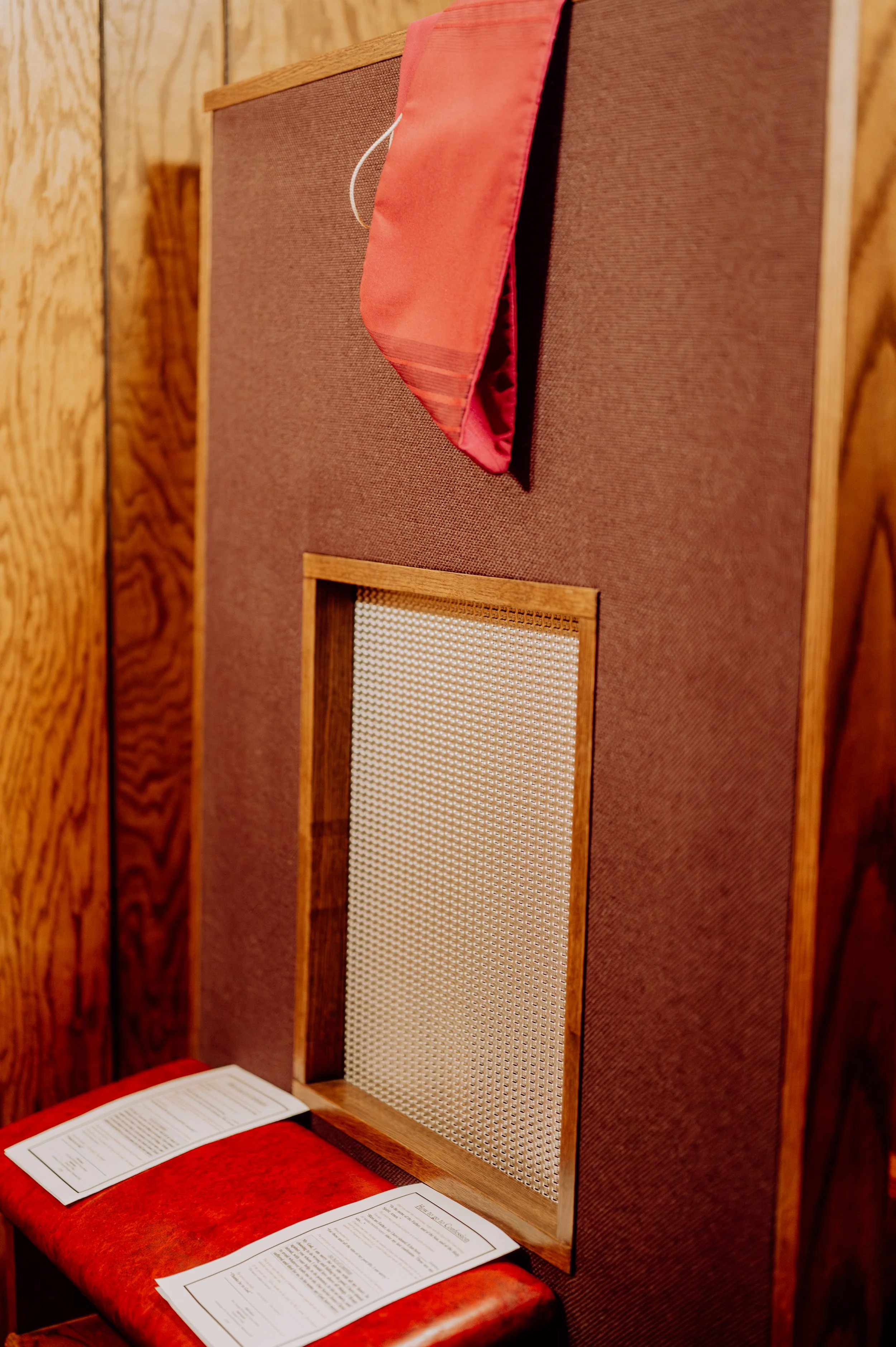
Reconciliation
What is Reconciliation?
Reconciliation, or Confession, is the sacrament instituted by Christ by which the baptized faithful receives absolution from sins and is reconciled with God and the Church.
Confessions are heard at St. Lawrence after every Mass, Monday through Saturday.
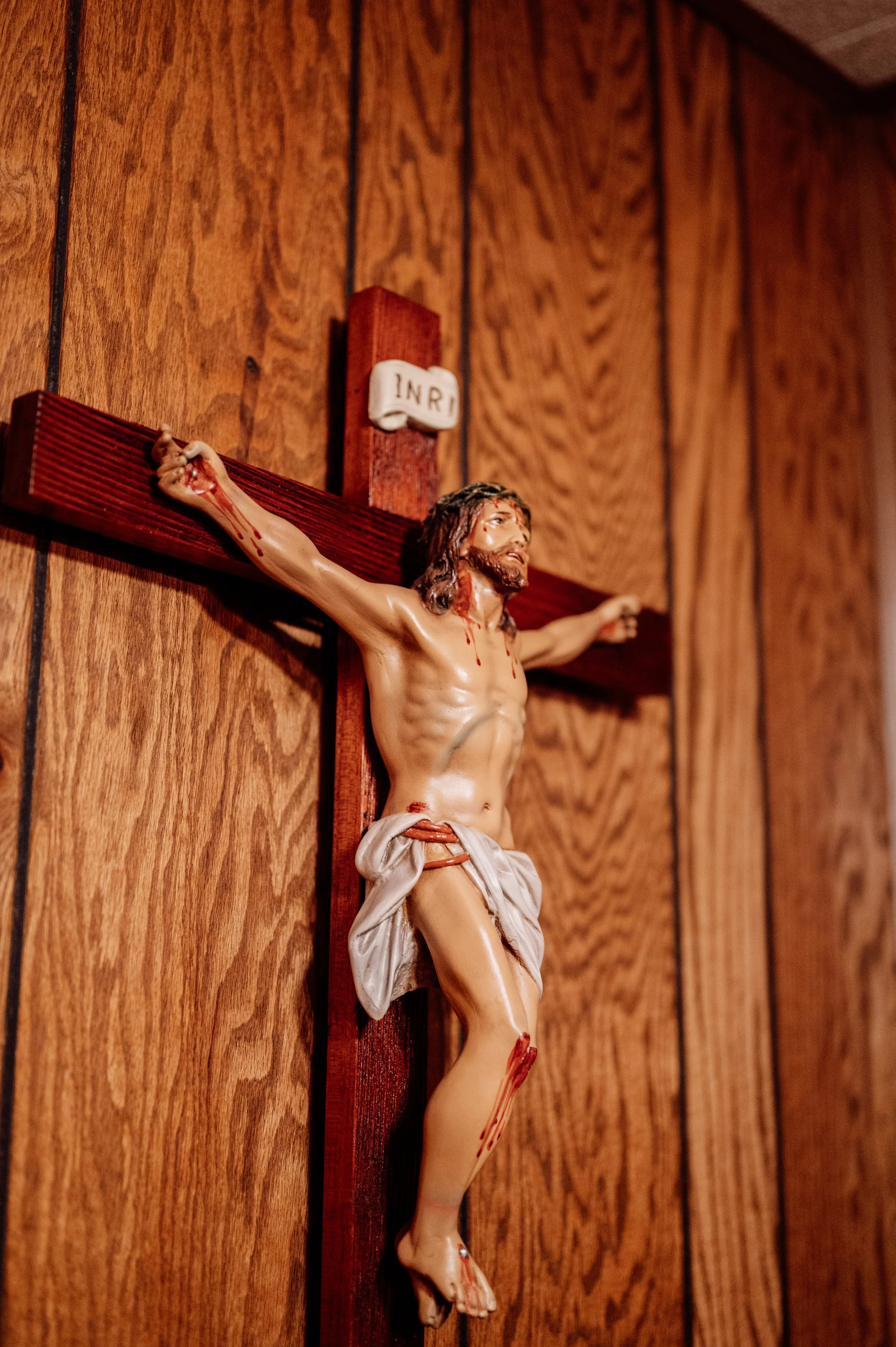
“Those who approach the sacrament of Penance obtain pardon from God's mercy for the offense committed against him, and are, at the same time, reconciled with the Church which they have wounded by their sins and which by charity, by example, and by prayer, labors for their conversion.”
- CCC 1422
FAQs
1. Why do I have to confess my sins to a priest?
That's the way Jesus set it up on Easter Sunday evening. He told his apostles that just as God the Father had sent him - and God the Father sent him to save our sins - so he was sending them. He breathed on them the power of the Holy Spirit, giving them God's power to forgive sins since no one can forgive sins but God alone. He told them that whatever sins they forgive are forgiven and whatever sins they retain are retained (JN 20:21-23; MK 2:7). Jesus thus established the essential structure of the sacrament of confession. Just as he uses priests to give us his Body and Blood at Mass so he uses them to give us His mercy in Penance.
2. What do I need to do to make a good confession?
The sacrament consists of three actions on the part of the penitent: contrition, which is sorrow for one's sins; confession, which is examining one's conscience and telling one's sins to the priest; and penance, namely a desire to make up for one's sins and amend one's life. Together the three are called the "acts of penitent."
3. How do I make a good Examination of Conscience?
One does so by asking for God's help and prayerfully examining one's actions in the light of Christ's teaching and example. Please refer to this confession guide for further assistance.
4. If I forget to confess a sin, are my sins forgiven?
Yes, if one, through bad memory or nervousness, forgets to confess a mortal sin, the person's confession is valid and all his or her sins will be forgiven. The person should, however, mention that forgotten sin in the next confession to receive a proper penance. If this is a routine occurrence, it is probably an indication that one is either confessing too infrequently or not fully aware of the gravity that is mortal sin. If, on the other hand, a penitent deliberately refuses to mention a mortal sin in confession, none of the person's sins will be forgiven, the person will remain in the dangerous state of mortal sin, and will be guilty of the additional sin of sacrilege.
5. How often do I need to go to Confession?
The church recommends that Catholics receive the sacrament of reconciliation frequently. Strictly speaking, after they've reached the age of reason, Catholics are obliged to confess their serious sins at least once a year (Code of Canon Law 989), but the minimum should not be made a maximum. Catholics should come to confession as soon as possible after they've committed a mortal sin. If they're seeking to grow in holiness, the regular practice of confession at least once a month is recommended.
6. How can I go to Confession for the first time?
You can email Br. Gary Davis to begin the process.